Field Guide 03 Updated August 2026

The Minimalist Kitchen Setup

A practical solo kitchen that makes good food easy, limits waste, and does not require spending Sunday packing fourteen identical plastic containers.

By Curtis Matthews12 min read

Cooking for one creates a math problem. Packages are too large, recipes assume a family, and the leftovers get boring before they get eaten. The fix is not more recipes. It is a controlled loop: fewer ingredients, more crossover, and deliberate freezer use.

Your kitchen should make the next good meal easier than delivery. That requires a clear counter, a short tool list, and default food that you already know how to turn into dinner.

01 / TOOLS

The short list that handles most meals

01

One sharp chef’s knife

Comfortable grip, useful blade length, and easy maintenance. Add a small utility knife only when you can name the weekly job it will do.

02

One large cutting board

Large enough to keep ingredients on the board. Use a nonslip base or a damp towel underneath.

03

One skillet, one saucepan, one sheet pan

That covers eggs, searing, grains, sauces, roasted protein, and vegetables. Match material to how you cook—not to a cookware set discount.

04

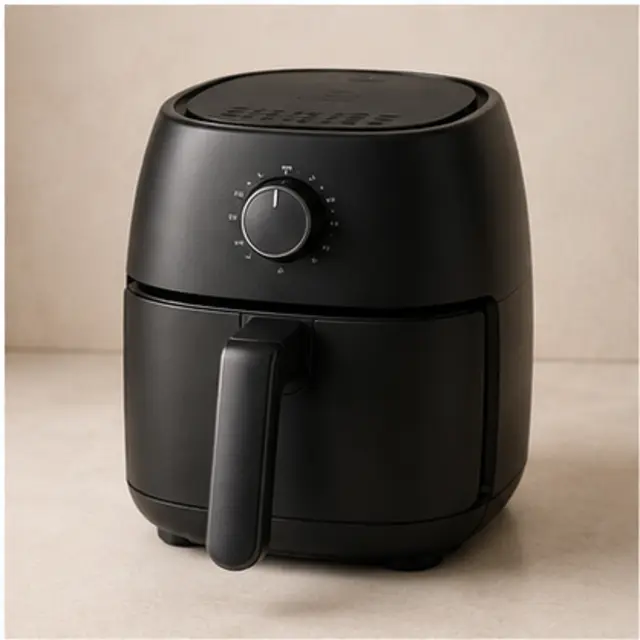
A compact air fryer

Useful for quick portions, crisp reheating, and low-cleanup cooking. Capacity, exterior dimensions, and washable parts matter most.

05

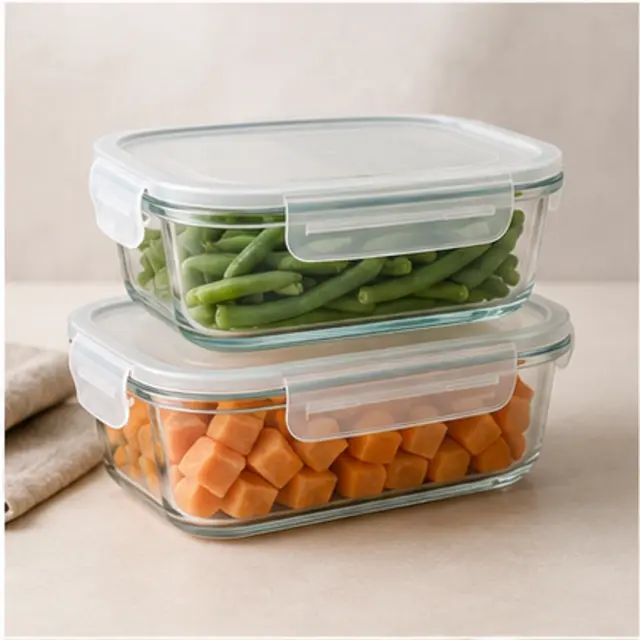
Eight matching containers

Use two sizes with interchangeable lids. Clear containers make leftovers visible. Freeze anything you will not eat within the next few days.

06

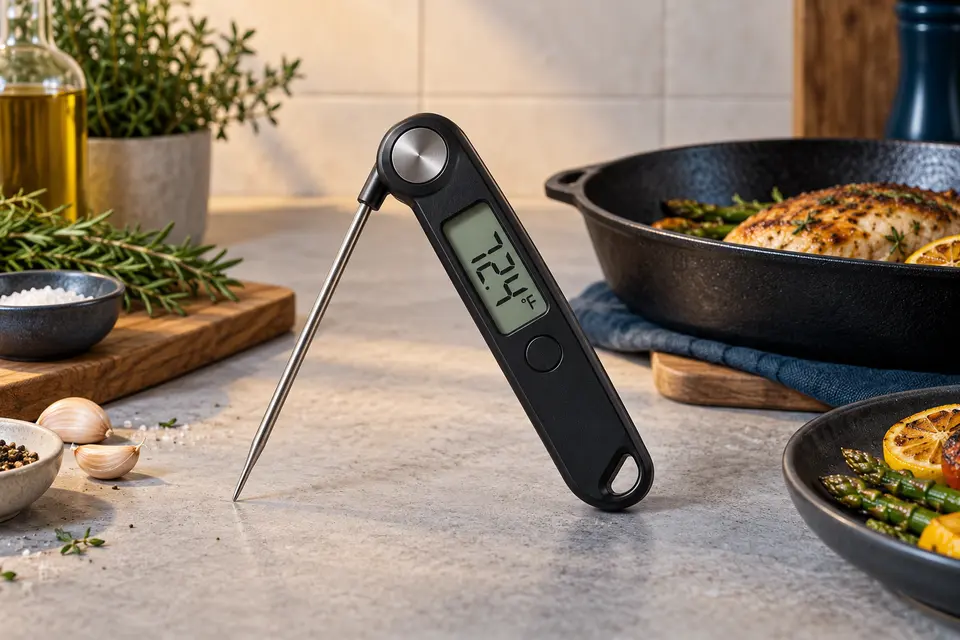
An instant-read thermometer

It removes guesswork from meat and poultry. Clean it after every use and follow current food-safety guidance.

02 / THE LOOP

Build a seven-day food system

Plan ingredients, not seven unrelated dinners. Each ingredient should appear in at least two meals. The same chicken can become a rice bowl, a wrap, and a salad. Roasted vegetables can support eggs, pasta, or a side dish.

1Audit

Check refrigerator, freezer, and calendar.

2Choose

Pick two proteins, two bases, and flexible produce.

3Buy

Shop from the list. Skip fantasy ingredients.

4Prep

Cook the longest item and portion the perishables.

5Freeze

Protect the third and fourth servings early.

Protein defaults

Eggs · Greek yogurt · chicken · lean ground meat · beans · frozen fish

Base defaults

Rice · potatoes · oats · tortillas · pasta · hearty greens

Flavor defaults

Olive oil · citrus · hot sauce · garlic · one all-purpose blend · two sauces

03 / PREP

Prep components, not a week of punishment

Identical meal containers look organized on Sunday and become a test of endurance by Thursday. Prepare components that can change form.

0:00

Start the slow item

Heat the oven. Start rice or potatoes. Put frozen food in the refrigerator to thaw safely.

0:10

Season and cook protein

Use a neutral seasoning if the protein will cross into multiple meals.

0:25

Wash and portion produce

Keep dressings and wet ingredients separate until serving.

0:40

Cool, label, and freeze

Date containers. Freeze servings you will not reach soon. Put the oldest food at eye level.

“The best meal plan is the one that survives Wednesday night.”
Useful, not decorative

Three purchases that can earn the space.

Selected for repeat use, compact storage, and easier solo cooking.

Affiliate disclosure: As an Amazon Associate I earn from qualifying purchases.

Fast cooking

Ninja AF101 4-Quart Air Fryer

A practical solo-kitchen size with straightforward air fry, roast, reheat, and dehydrate controls plus dishwasher-safe removable parts.

Best forQuick protein, vegetables, and reheating
View on Amazon

Food control

Rubbermaid Brilliance Glass Set

Nine glass containers in useful sizes with matching airtight lids. The modular shape stacks cleanly in the refrigerator and cabinet.

Best forVisible leftovers and freezer portions
View on Amazon

Remove guesswork

ThermoPro TP19H Thermometer

A quick-reading folding thermometer with an ambidextrous display and waterproof construction for easier cleaning.

Best forRepeatable cooking without overcooking
View on Amazon

04 / SUBSCRIPTIONS

Factor vs. HelloFresh for a single man

These services solve different problems. Factor delivers prepared meals that are heated before eating. HelloFresh’s traditional meal kits deliver portioned ingredients and recipes that you cook. HelloFresh also offers prepared items in some menus, so verify what is available in your area before choosing.

FACTORTime first

Choose it when cooking is the bottleneck.

  • Prepared meals with minimal cleanup
  • Easy portion and nutrition review before selection
  • Less cooking flexibility than buying ingredients
  • Refrigerator space and delivery timing still matter
Visit Factor directlyOfficial website · Non-affiliate link
HELLOFRESHSkill first

Choose it when planning is the bottleneck.

  • Portioned ingredients and guided recipes
  • More active cooking and cleanup
  • Useful for building a repeatable recipe library
  • Two-person recipes can create planned leftovers for one
Visit HelloFresh directlyOfficial website · Non-affiliate link
DecisionFactorHelloFreshGrocery loop
Hands-on timeLowestModerateModerate
Cooking practiceLowHighHighest
Recipe controlLowModerateHighest
Best roleBusy-week backupGuided cookingLong-term default

Service details change. Review the current terms and menu at Factor and HelloFresh before subscribing.

05 / RESET

The 45-minute kitchen reset

  1. 10 min

    Empty the refrigerator doors and drawers.

    Discard expired food. Group what remains by use.

  2. 10 min

    Remove duplicate and unused tools.

    Box questionable items for thirty days. If you never retrieve them, donate them.

  3. 10 min

    Create one prep zone.

    Clear the largest counter. Keep only frequently used equipment within reach.

  4. 10 min

    Write five default meals.

    Choose meals you already like and can repeat without a new shopping strategy.

  5. 5 min

    Schedule the next shop and freezer audit.

    A system stays clean because it has a reset date.