A home gym earns its place when it removes excuses without creating a new storage problem. For most single men in an apartment, the winning setup is not a rack, plates, and rubber flooring. It is a compact stack that covers squat, hinge, push, pull, carry, and conditioning.
The target is simple: walk to one corner, start training in under two minutes, and return the room to normal when you finish. If equipment takes longer to assemble than your warm-up, you bought a project.
01 / BUYING RULES
Three rules before you buy anything
Every tool needs at least three jobs.
Dumbbells press, row, squat, hinge, carry, and curl. A giant single-purpose machine does one movement and occupies the room all week.
Your weakest surface controls the load.
Check flooring, doorframes, ceiling clearance, and building rules. A strong pull-up bar is useless if the trim cannot support it.
Storage is part of the product.
Measure the equipment when folded, not just while in use. Know exactly where it goes before the box arrives.
02 / FOOTPRINT
Choose the layout that fits your actual room
Use painter’s tape to mark the active footprint on the floor. Perform a bodyweight squat, push-up, reverse lunge, and floor press inside it. If you hit furniture, the layout is too tight.
“The room does not need to look like a gym. It needs to become a gym in sixty seconds.”
03 / EQUIPMENT
The equipment stack, in buying order
Start with resistance. Then solve support, pulling, floor protection, and easy movement. Buy the next item only when the current setup exposes a real limitation.
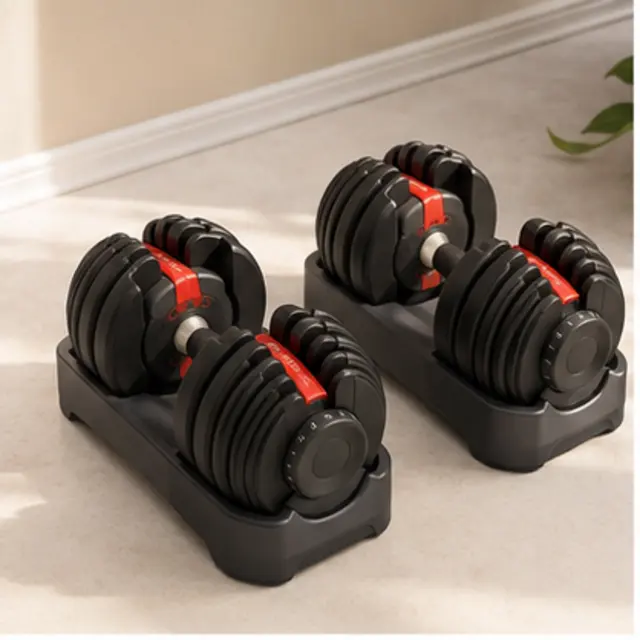
Adjustable dumbbells
Choose a range that covers lateral raises at the light end and rows or Romanian deadlifts at the heavy end. Fast changes matter if your program uses paired exercises. Long handles can feel awkward at light weights, so grip a display pair if possible.
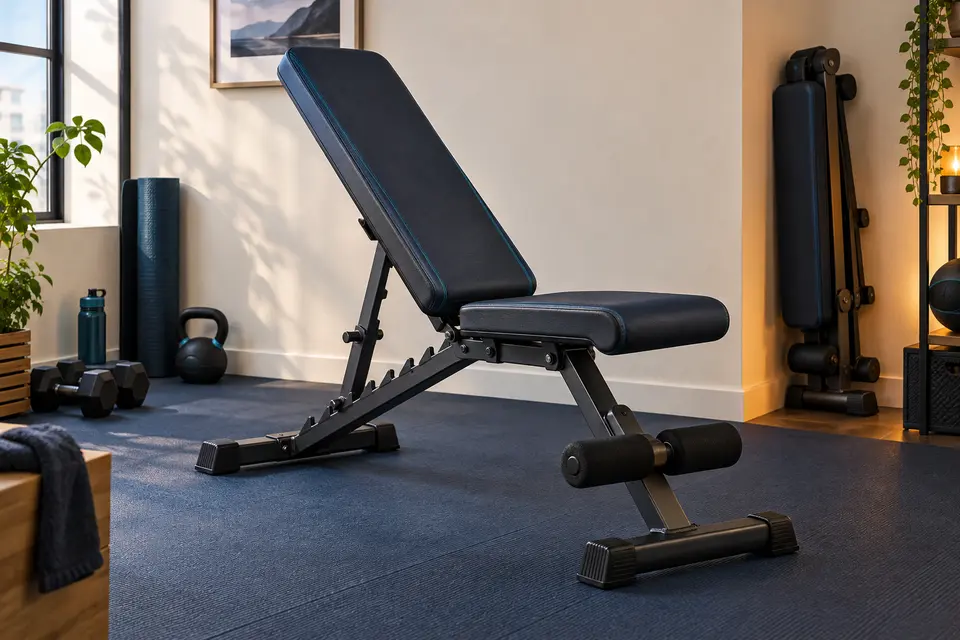
Adjustable folding bench
Test load rating, back-pad stability, folded height, and whether the feet damage soft flooring. A stable flat position matters more than twelve incline angles.
Pull-up bar and bands
A bar adds vertical pulling and loaded hangs. Bands add warm-ups, face pulls, pulldowns, and assistance. Confirm fit and inspect the installation before every session.
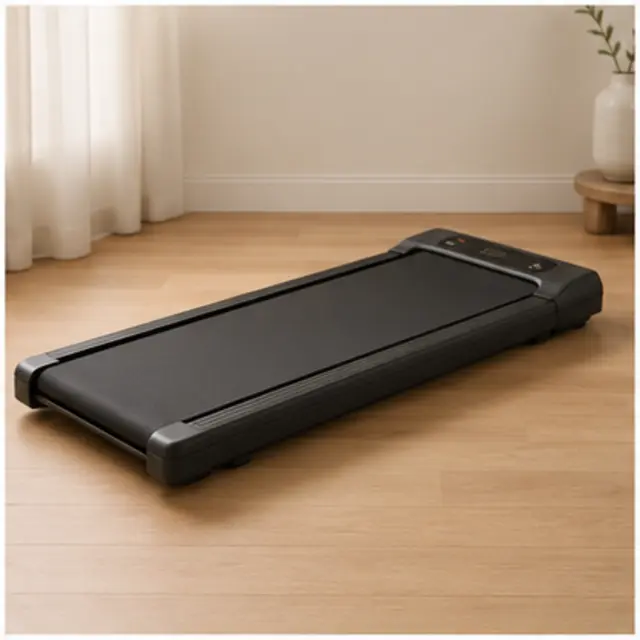
Walking pad
Check unit weight, stored height, belt dimensions, speed range, noise, and warranty. A walking pad is for steady movement—not a replacement for a running treadmill.